What to Do When Pressure Washing Doesn’t Remove a Stain
You pressure washed your driveway, patio, or siding, but the stain is still there. It can be frustrating to spend time cleaning only to see stubborn marks remain on the surface. The truth is that not all stains can be removed with water pressure alone. Some stains require special cleaning solutions, different techniques, or professional treatment. Understanding why a stain remains can help you choose the right solution and avoid damaging your property.
Understanding Why Some Stains Survive Pressure Washing
The Difference Between Surface Dirt and Deep-Set Stains
Surface dirt usually sits on top of concrete, siding, brick, or other exterior materials, which makes it easier to remove with pressure washing. Deep-set stains are different because they soak into pores, cracks, or textured areas of the surface. These stains may come from oil, rust, minerals, algae, or organic buildup that has been sitting for a long time. When a stain has bonded with the material, water pressure alone may only clean the surface around it. Understanding the type of stain is the first step in choosing the right cleaning method.
How Long-Term Exposure Can Make Stains Harder to Remove
The longer a stain stays on a surface, the harder it can be to remove. Sun, rain, heat, moisture, and foot traffic can cause stains to settle deeper into the material over time. Concrete, pavers, wood, and siding can all absorb contaminants when stains are not treated quickly. Older stains may also leave behind discoloration even after the loose buildup has been removed. Acting sooner can improve the chances of a cleaner and more even result.
Why Water Pressure Alone Is Not Always Enough
Pressure washing is powerful, but it does not solve every stain problem by itself. Some stains need a cleaning solution that breaks down the source of the discoloration before rinsing. For example, oil stains may need degreasers, rust stains may need rust removers, and organic stains may need treatments that target mold or algae. Using pressure alone can sometimes push stains deeper or damage the surface if the pressure is too high. The best results often come from using the right mix of cleaning products, dwell time, and safe washing techniques.
Common Stains That May Require More Than Pressure Washing
Rust Stains on Concrete and Hard Surfaces
Rust stains can appear on concrete, driveways, sidewalks, patios, and other hard surfaces due to metal furniture, irrigation, tools, or exposed metal fixtures. These stains often leave orange or brown marks that do not rinse away easily with pressure washing. Rust bonds with the surface and usually needs a specialized rust-removal solution to break it down. Trying to blast rust away with too much pressure may etch concrete or leave uneven marks. A targeted treatment is often the safer and more effective option.
Oil, Grease, and Automotive Fluid Stains
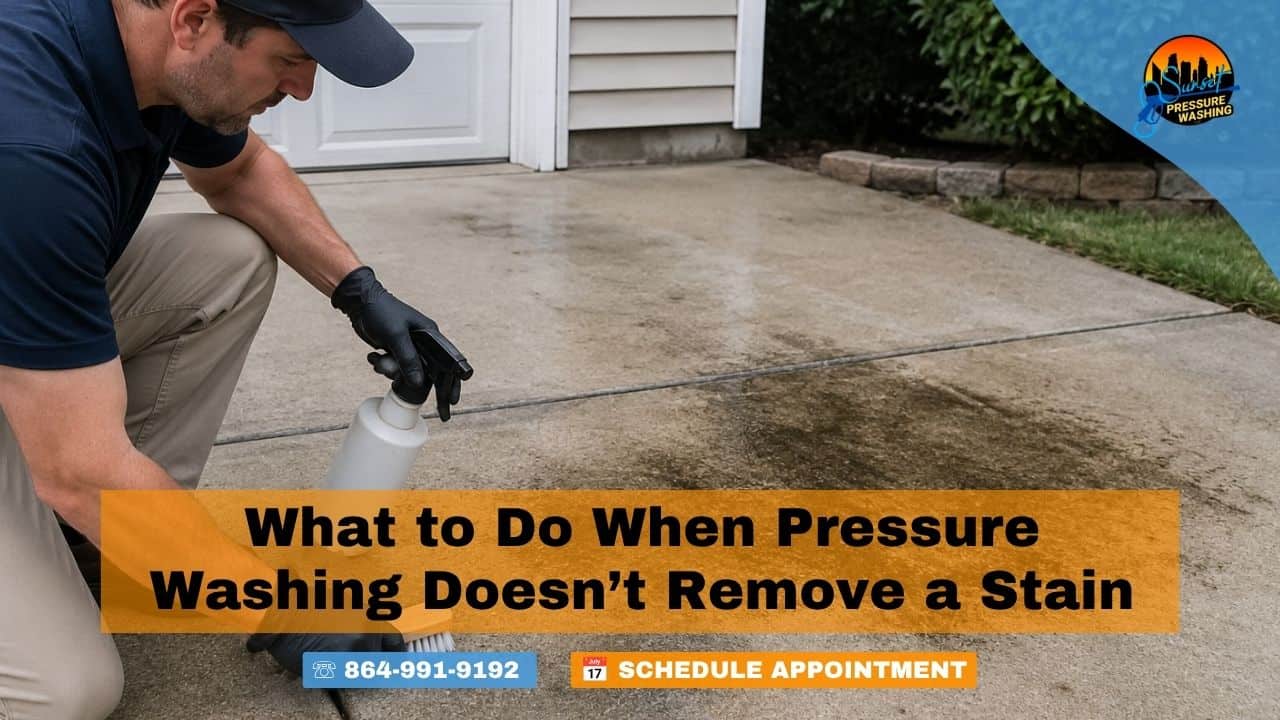
Oil, grease, and automotive fluids are common problems on driveways, garage floors, parking areas, and concrete surfaces. These stains can soak into porous materials and leave dark marks that remain after pressure washing. A degreaser or pre-treatment is often needed to loosen the oil before the surface is cleaned. Older oil stains may require more than one treatment and may not disappear completely if they have deeply penetrated the surface. Proper cleaning methods can still reduce the stain and improve the overall appearance of the area.
Organic Stains from Mold, Mildew, Algae, and Leaf Tannins
Organic stains are often caused by moisture, shade, leaves, mold, mildew, algae, and plant debris. These stains can appear as green, black, brown, or dark patches on siding, concrete, decks, roofs, and walkways. Pressure washing may remove the visible layer, but it may not fully treat the growth causing the stain. Cleaning solutions designed for organic buildup can help kill and lift the source more effectively. Without proper treatment, these stains can return quickly, especially in damp or shaded areas.
Effective Solutions for Stubborn Pressure Washing Stains
Using Specialized Cleaning Solutions for Specific Stains
Different stains require different cleaning solutions. Rust, oil, algae, mildew, and tannin stains each respond better to products made for their specific cause. Using the wrong cleaner may waste time, leave the stain behind, or even damage the surface. Professional cleaning teams know how to match the right product to the stain and surface type. This helps improve results while reducing the risk of harm to concrete, siding, wood, brick, and other materials.
Applying Pre-Treatments Before Cleaning
Pre-treatment helps loosen stains before pressure washing begins. This step gives the cleaning solution time to break down oil, organic buildup, rust, or other contaminants. Once the stain has been treated, pressure washing can remove the loosened material more effectively. Skipping pre-treatment may lead to poor results because the stain has not been properly broken down. For stubborn stains, the cleaning process often works better when the surface is treated first and rinsed after the right dwell time.
Combining Soft Washing and Pressure Washing Techniques
Some surfaces need more than one cleaning approach to achieve a better result. Soft washing uses lower pressure along with cleaning solutions to treat stains safely, while pressure washing uses stronger water force to rinse away dirt and buildup. Combining both methods can be helpful for surfaces that need stain treatment without damage. This approach is often used on siding, roofs, delicate materials, and areas with organic growth. The right technique depends on the surface, the stain, and how deeply the stain has set in.
Mistakes to Avoid When a Stain Won’t Come Out
Increasing Pressure Beyond Safe Levels
Turning up the pressure may seem like the easiest way to remove a stubborn stain, but it can cause serious damage. Too much pressure can etch concrete, strip paint, damage siding, splinter wood, or force water behind surfaces. Once damage happens, repairs can cost more than proper stain treatment would have. High pressure also does not always address the source of the stain. A safer approach is to identify the stain and use the right cleaning method instead of relying on force alone.
Using the Wrong Cleaning Products
Not all cleaning products are safe for every surface or stain. Harsh chemicals can discolor materials, harm plants, corrode metal, or leave residue behind if they are not used correctly. Some products may also react poorly with certain surfaces or fail to treat the stain at all. Reading labels and understanding proper dilution are important before applying any cleaner. Professional cleaners use products carefully to protect the property while improving stain removal results.
Repeatedly Cleaning Without Identifying the Stain Source
Cleaning the same area over and over without knowing the cause of the stain can waste time and damage the surface. A stain from rust, oil, algae, irrigation minerals, or tree debris may each need a different solution. If the source is not addressed, the stain may come back even after cleaning. For example, a sprinkler causing rust or mineral stains will continue to create the same issue unless the source is corrected. Identifying the reason behind the stain helps create a better long-term solution.
When to Call a Professional Pressure Washing Company
How Professionals Diagnose and Treat Different Stain Types
A professional pressure washing company can inspect the stain, surface type, and surrounding conditions before choosing a cleaning method. This helps determine whether the stain is caused by oil, rust, algae, mildew, minerals, or another source. Professionals also know which products and techniques are safer for each material. Their experience helps prevent guesswork and reduces the risk of surface damage. Proper diagnosis can lead to better results and a cleaner finished look.
Preventing Surface Damage While Removing Tough Stains
Stubborn stains often require more care than basic pressure washing. Professionals understand how much pressure a surface can handle and when lower-pressure methods are needed. They can use the right nozzles, cleaners, and application methods to protect concrete, siding, brick, pavers, decks, and other surfaces. This is especially important for older materials or areas that are already worn. Professional cleaning helps remove tough stains while keeping the surface as safe as possible.
How Sunset Pressure Washing Helps Restore Stained Surfaces Safely and Effectively
Sunset Pressure Washing helps homeowners and businesses deal with stains that regular pressure washing may not remove. Their team uses the right cleaning methods based on the surface and the type of stain being treated. Whether the issue involves rust, oil, algae, mildew, or deep-set grime, they can recommend a safer and more effective cleaning approach. Professional service helps improve curb appeal while reducing the risk of damage from improper cleaning. With the right care, stained surfaces can look cleaner, brighter, and better maintained.
If the stain won’t budge, let us bring in the pressure.
Not every stain can be removed with pressure washing alone, especially when it has soaked deep into the surface or requires specialized treatment. Understanding the cause of the stain is the key to choosing the right cleaning solution and avoiding unnecessary damage. Professional pressure washing services can help identify stubborn stains and use the proper techniques to improve results safely. Whether you are dealing with rust, oil, algae, or other tough stains, expert help can save time and protect your property. Contact Sunset Pressure Washing today to schedule a professional cleaning and restore the appearance of your outdoor surfaces.